
Heavy equipment is a broad field. That is why the messaging needs to be specific.
A company may focus on excavation, grading, site preparation, land clearing, hauling, equipment rental, roadwork, demolition support, trenching, snow services, oilfield support, aggregate work, or fleet maintenance. Another company may support construction crews, developers, industrial clients, municipalities, or rural properties.
Those are very different buyers.
Your marketing should not make them all work to figure out if you are a fit.
The clearer the positioning, the easier it is for the right customer to contact you. A contractor looking for excavation support should not have to guess whether you handle site prep. A property owner needing land clearing should not have to dig through ten vague paragraphs. A commercial buyer should not be left wondering if you can handle larger sites.
Say it plainly.
That is usually stronger than trying to sound impressive.
Edmonton has a lot of heavy work happening around construction, industrial sites, commercial development, roadwork, maintenance, and surrounding growth areas. Buyers in this space do not want uncertainty.
They want a company that looks steady.
If your business serves Edmonton and nearby areas like Leduc, Nisku, Acheson, Sherwood Park, Fort Saskatchewan, St. Albert, Spruce Grove, Stony Plain, or Beaumont, that should be clear without turning the page into a city dump.
The location matters.
But the work matters more.
A good industry page should help buyers understand that your company serves the region and understands the type of projects common in this market. Tight weather windows. Mud season. Frozen ground. Spring melt. Access issues. Hauling schedules. Site coordination.
These things are part of the work here.
Your marketing should sound like it knows that.
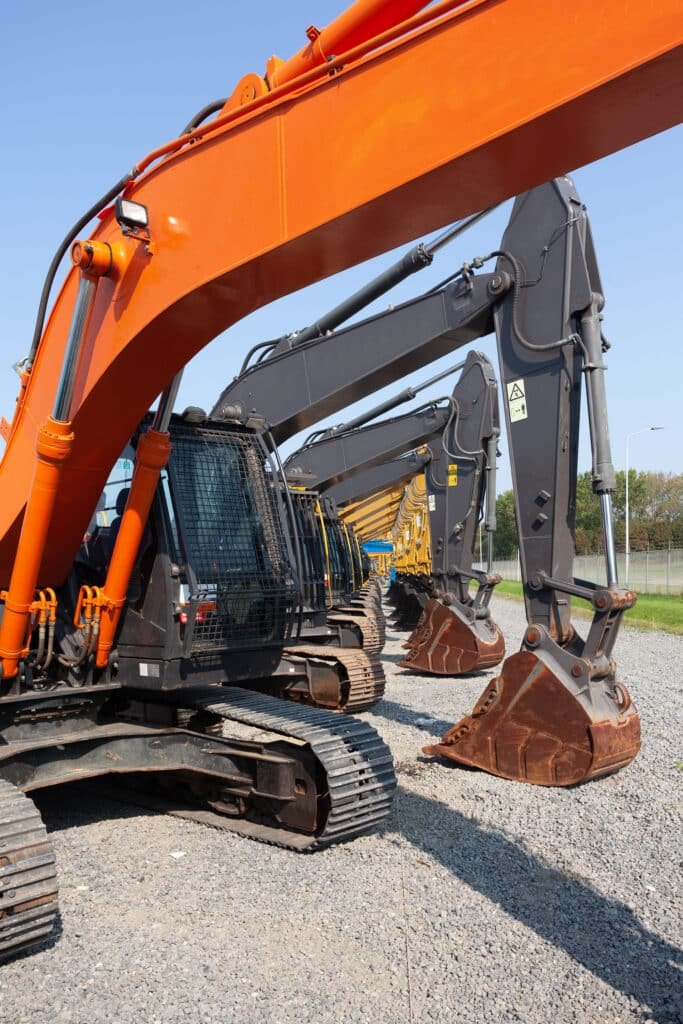
For heavy equipment companies, photos matter because buyers want to see what kind of operation they are dealing with.
Clean machines help. Job-site photos help more.
A grader on a road job. An excavator on a site cut. Skid steers doing cleanup. Loaders handling material. Trucks staged properly. Crews working safely. Finished groundwork. Equipment in real conditions.
That kind of proof says more than a paragraph of claims.
But photos still need context.
A page should explain what the work was, who it helps, and what type of jobs the company is suited for. Otherwise, it is just a gallery. Nice to look at, sure, but not doing enough to help the buyer decide.
The goal is to make the company feel active, capable, and easy to trust.
Heavy equipment buyers often need information quickly. They may be checking availability, comparing contractors, planning a project, or trying to solve a problem that already affects the schedule.
So the path to contact needs to be clear.
What equipment or services are available?
What areas do you serve?
Do you handle commercial, industrial, municipal, rural, or construction work?
Can someone request a quote, site visit, or callback?
What details should they provide?
If the page leaves too many blanks, the lead can go cold.
Good marketing does not need to push too hard. It just needs to make the next step obvious.
A buyer should feel like, “Yes, this company probably handles what we need. I can contact them.”
That is the moment you are trying to create.
Heavy equipment companies often serve wider areas than smaller local trades. That service coverage should be shown clearly, especially if the company works across Edmonton, surrounding cities, industrial parks, acreage areas, and construction zones.
But it should not take over the page.
Nobody wants to read the same sentence with eight city names jammed into it.
A smoother approach is to mention the main service region, then explain why coverage matters. Buyers want to know whether the company can reach their site, support the project area, and work around local conditions.
If a specific location becomes important enough, it can have its own page later.
The main industry page should stay useful, readable, and grounded.
Most heavy equipment companies say they are reliable, experienced, and ready for any job.
That is fine.
But it is also what everyone says.
To stand out, your business needs to show the type of work it actually wants more of. Site preparation. Excavation. Grading. Land clearing. Equipment rental. Hauling. Snow support. Roadwork. Industrial site work. Construction support. Whatever fits the company, it should be clear.
The goal is not to look bigger than you are.
The goal is to look like the right fit.
A small, specialized equipment company can still look highly credible if the messaging is tight and the proof is clear. A larger company can still lose trust if the website feels outdated, confusing, or too generic.
The market does not reward vague.
Improve your rankings, increase organic traffic, and get found by customers.
Optimize your Google Business Profile to attract local customers, and increase trust online.
Enhance your website’s search performance with structured data that helps search engines better improve your visibility online.
Modern, mobile-friendly websites built to convert visitors into customers. Fast, responsive, and designed for your brand.
Optimized content built to improve search visibility across AI search platforms, and local search results.
Strengthen your website authority with high-quality backlink strategies that drive more organic traffic to your business.
Drive fast, targeted traffic through strategic Paid Ads campaigns designed to generate more quote requests, phone calls, and booked concrete projects.
Grow your online presence with creative social media strategies that increase engagement.
Streamline your lead management process with CRM systems designed to help you organize inquiries, and improve follow-ups.